
AD0-E559 Adobe Marketo Engage Business Practitioner Expert Exam Topics and Questions
These Adobe Marketo Engage Business Practitioner Expert (AD0-E559) exam topics are organized according to official exam domains to help candidates quickly verify coverage and focus on assessment rather than theory. Each domain is paired with topic-wise AD0-E559 sample questions that reflect how objectives are tested in the actual exam. This structure enables efficient review, targeted self-assessment, and rapid identification of weak areas when preparing for the Adobe Marketo Engage Business Practitioner Expert certification exam.
Let's Practice Free Adobe AD0-E559 Questions Aligned with Official Exam Topics
Administration and Maintenance is the foundation everything else depends on. Get the CRM sync wrong and your campaign data is unreliable from the start. Get workspaces and partitions wrong and the wrong leads end up in the wrong hands. This topic rewards candidates who understand how Marketo is wired to the rest of the stack, not just how to use it once it is running. – CRM connectivity and sync mapping Marketo has native, out-of-the-box synchronization with a small number...
Administration and Maintenance is the foundation everything else depends on. Get the CRM sync wrong and your campaign data is unreliable from the start. Get workspaces and partitions wrong and the wrong leads end up in the wrong hands. This topic rewards candidates who understand how Marketo is wired to the rest of the stack, not just how to use it once it is running.
– CRM connectivity and sync mapping
Marketo has native, out-of-the-box synchronization with a small number of CRM platforms, and knowing which ones qualify matters for the exam. Beyond naming them, you need to understand what the mapping process actually involves: which objects and fields move between the systems, in which direction, and what happens when there is a conflict. The sync is not a one-time setup step. Field mapping decisions made at configuration time shape what data is available in smart lists, filters, and flow steps throughout the entire instance. Candidates who treat this as trivia rather than architecture tend to stumble when a scenario describes a data mismatch and asks where the problem originates.
– Users, roles, workspaces and partitions
Users and roles are distinct concepts and the exam tests whether you can tell them apart in a scenario rather than just define each one in isolation. A user is an individual account; a role is a permission set applied to that account. The separation matters when a scenario describes an access problem and asks what change would fix it.
Workspaces and partitions add another layer. Workspaces control which assets a user can see and act on; partitions control which lead records are accessible. The two work together but they are not the same thing. The exam presents business scenarios, such as a company with multiple regional teams or product lines, and asks you to identify whether a workspace, a partition, or both are the right fit. Defaulting to one without considering the other is the common mistake.
The Audit Trail ties this section together. When something changes in the instance, the Audit Trail is where you go to find out what happened, who made the change, and when. Exam items on this sub-topic are usually scenario-based: an asset behaves unexpectedly, and you need to identify which Audit Trail entry explains it.
How Administration and Maintenance is tested
At 12% of the exam, this topic generates a meaningful cluster of items, and most of them are scenario-based rather than recall-based. You will not be asked to recite a list of CRM platforms with native sync; you will be given a business situation and asked to identify which platform or which configuration applies.
The trap in this topic is treating administrative concepts as background knowledge rather than decision-making knowledge. Items reward the ability to distinguish between similar-sounding options: a user versus a role, a workspace versus a partition, a field mapping issue versus a sync timing issue. When a scenario describes unexpected behavior in the instance, items reward tracing it to the correct administrative layer rather than jumping to a campaign-level explanation.
Locating where information is referenced inside Marketo is another area where candidates lose marks. Knowing that a piece of configuration exists is not enough; you need to know exactly where in the interface to find it. Work through realistic scenarios during preparation rather than reading definitions.
The ITExamsTopics practice test covers all six sub-topics in this domain. Because administrative scenarios can be phrased many different ways, working through a full bank lets you spot the specific wording patterns that signal a workspace question versus a sync question before you sit the real exam.
The question below puts you in a scenario that turns on one of the administrative distinctions covered in this topic. Work through it before checking your reasoning.
An Adobe Marketo Engage instance has the following folders set up under Marketing Activities:
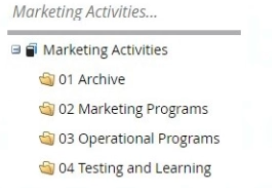
In the My Tokens tab of the 02 Marketing Programs folder, several tokens have been set up:
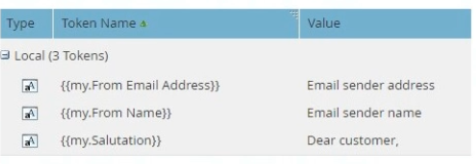
Why have these tokens been set up in this folder?
Nearly half the exam lives here. That weighting reflects the reality of the job: campaign configuration and execution is where most Marketo practitioners spend most of their time, and it is where the most consequential mistakes happen. The breadth is the challenge. This topic runs from Smart Campaign logic through tokens, webhooks, engagement programs, forms, A/B testing, and event integrations. Gaps anywhere in that range will cost you. – Smart Campaigns: logic, flow and troubleshooting Smart Campaigns are the engine...
Nearly half the exam lives here. That weighting reflects the reality of the job: campaign configuration and execution is where most Marketo practitioners spend most of their time, and it is where the most consequential mistakes happen. The breadth is the challenge. This topic runs from Smart Campaign logic through tokens, webhooks, engagement programs, forms, A/B testing, and event integrations. Gaps anywhere in that range will cost you.
– Smart Campaigns: logic, flow and troubleshooting
Smart Campaigns are the engine of Marketo execution, and the exam tests them at depth. You need to understand how triggers and batch campaigns differ in behavior, how filters combine using AND and OR logic, and how constraints narrow the scope of a trigger. Flow steps execute in order, and the order matters: a flow step that changes a value before a subsequent step reads it will produce a different outcome than the reverse sequence.
Troubleshooting is a major sub-theme. Given a campaign that is not behaving as expected, you need to identify the root cause from the available evidence. Communication limits are a specific troubleshooting area: when leads are not receiving messages, the cause might be a program-level setting, an instance-level limit, or a smart list that is filtering them out. Items reward methodical diagnosis rather than guessing at the most obvious cause.
The 'Used By' reference check belongs here too. Before changing or deleting an asset, a practitioner should verify where it is referenced. Items present scenarios where an edit has unintended downstream effects and ask you to identify what the practitioner should have checked first.
– Programs, channels, tags and period cost
Programs are the organizational and reporting unit in Marketo. Channels define the progression statuses a program member can move through, and the exam tests whether you understand the relationship between a channel and the program types it can be applied to. Tags are metadata applied to programs for filtering and reporting purposes. Period cost is the budget figure attached to a program for a given month, and it feeds directly into revenue and ROI reporting.
These four elements interact. A candidate who understands each one in isolation but cannot describe how they connect will struggle with scenario items that ask why a report is showing unexpected numbers or how to configure a new program to produce accurate attribution data. The exam does not ask you to memorize the full list of default channels; it asks you to reason about how a channel configuration would affect program behavior and reporting output.
– Engagement Programs, tokens and global assets
Engagement Programs have their own configuration rules, and the exam tests them specifically. Stream cadence, content prioritization, and exhausted content behavior are all examinable. The most common mistake candidates make is treating an Engagement Program as a batch email series rather than understanding the rules that govern when and whether a piece of content is sent to a given member.
Tokens extend across nearly every Marketo asset type. The exam expects you to differentiate between token types: program tokens, folder tokens, lead tokens, and system tokens each have a different scope and a different appropriate use case. Using the wrong token type in a scenario is a realistic trap.
Global assets, such as globally shared templates or snippets, exist to enforce consistency across programs. The exam tests whether you understand when a global asset is the right tool versus a local copy, and what the operational implications of editing a shared asset are. A change to a global asset propagates; a change to a local copy does not.
– Forms, A/B testing, webhooks, PMCF and webinar integrations
Forms in Marketo have capabilities that go beyond simple data capture. Visibility rules, progressive profiling, and pre-fill behavior are all testable. The exam presents scenarios where a form is producing unexpected data or user experience and asks you to identify the configuration that would fix it.
A/B testing items ask you to both design a test strategy and interpret its results. Knowing what to test is as important as knowing how to set up the test. Items reward selecting the variable and the success metric that would produce a meaningful, actionable result.
Webhooks allow Marketo to send data to external services and receive responses. The exam tests conceptual understanding of when a webhook is the right tool and how it fits into a flow step, not the mechanics of writing one.
The Program Member Custom Field (PMCF) captures data at the program membership level rather than the lead level. Knowing when that distinction matters is the examinable point. Webinar provider integration through event programs is tested in terms of which data passes between systems and how program statuses map to webinar attendance data.
How Marketing Activities/Campaign Management is tested
At 46% of the exam, this topic alone determines whether you pass. The item style is predominantly scenario-based: you are given a configured program, a business requirement, or an observed outcome, and you must identify the next step, the root cause, or the correct configuration.
Items in this topic reward precision. Two answer options will often both be technically possible, but one will be appropriate for the scenario and one will not. The difference is usually a constraint you need to read carefully: the program type, the channel, the token scope, or the communication limit setting.
Candidates lose marks most often in three areas. First, Smart Campaign logic errors, particularly around filter combinations and flow step sequencing. Second, Engagement Program configuration, where the rules governing content delivery are misunderstood. Third, attribution and program setup for reporting, where a program configured without the right channel or period cost produces reporting that cannot be trusted.
Breadth matters as much as depth here. A strong grasp of Smart Campaigns will not compensate for a gap in webhooks or PMCF if those sub-topics appear on your version of the exam.
With 14 sub-topics to cover, this domain is where a timed practice test earns its value. Working through questions under time pressure reveals which sub-topics you can answer confidently and which ones you are second-guessing, far more reliably than re-reading documentation.
The question below is drawn from this domain. Treat it as a diagnostic: if your reasoning feels uncertain, that sub-topic is worth revisiting before exam day.
An Engagement Program has not deployed the next new email even though there are people in the stream and the cadence set correctly.
What is one possible reason the email has not been launched?
Campaign execution moves leads through programs, but Lead Management is about what happens to those leads at a higher level: how they are classified, scored, progressed through a lifecycle, and understood as individuals through their activity history. At 12%, this topic carries the same weight as Administration, and it is tested with the same scenario-based precision. The decisions you make in a lifecycle model or a scoring model are strategic, and the exam treats them that way. How Lead Management...
Campaign execution moves leads through programs, but Lead Management is about what happens to those leads at a higher level: how they are classified, scored, progressed through a lifecycle, and understood as individuals through their activity history. At 12%, this topic carries the same weight as Administration, and it is tested with the same scenario-based precision. The decisions you make in a lifecycle model or a scoring model are strategic, and the exam treats them that way.
How Lead Management is tested
Items in this topic present a business situation and ask you to make or evaluate a decision, not recall a definition. A lifecycle model question will describe a company's sales process and ask you to identify which decision point or status transition is missing or misconfigured. A scoring question will describe a lead's behavior and ask whether the scoring model would handle it correctly under given best-practice rules.
Interesting moments are tested in terms of selection and appropriateness: given a set of lead behaviors, which ones warrant an interesting moment notification and which do not. The activity log is tested as a diagnostic tool. You are given a description of a lead's behavior or a data discrepancy and asked to identify which activity log entry would explain it.
Creation source is a frequent trap. Leads enter Marketo through multiple paths, and the exam tests whether you can identify the correct source given the available evidence. Candidates who conflate sync-created leads with form-filled leads, or who overlook the implications of list imports, tend to lose marks here. Items reward tracing the lead's origin precisely.
A question bank lets you check your lead management reasoning across varied scenario types without the time investment of building a test instance. Run through the Lead Management questions as a focused session to identify any gaps in your lifecycle or scoring logic before the exam.
The question below tests your ability to reason through a lead management scenario. Work out your answer before reading ahead.
Data Management sits at 10% and covers the less glamorous but operationally critical work of keeping an instance clean, structured, and trustworthy. Poor data management does not just affect this topic on the exam; it undermines the campaign and reporting topics too. The exam tests whether you understand how data quality is built and maintained systematically, not just how to fix a problem after it appears. How Data Management is tested This topic's items tend to be more conceptual than...
Data Management sits at 10% and covers the less glamorous but operationally critical work of keeping an instance clean, structured, and trustworthy. Poor data management does not just affect this topic on the exam; it undermines the campaign and reporting topics too. The exam tests whether you understand how data quality is built and maintained systematically, not just how to fix a problem after it appears.
How Data Management is tested
This topic's items tend to be more conceptual than mechanical. Setting up a data management program is tested in terms of structure and purpose: what the program is designed to detect or correct, and how it fits into a broader data governance approach. You will not be asked to click through a configuration step by step; you will be asked to identify which approach is appropriate for a described data quality problem.
Data retention policy as it relates to smart lists is a specific and often underestimated sub-topic. Marketo does not retain all activity data indefinitely, and the boundaries of that retention affect what smart lists can reliably return. Items reward knowing where those boundaries apply and how they should influence the way you build filters.
Segmentation is tested at the level of how it works and when it is the right tool. The distinction between a segmentation and a smart list is a classic exam trap: both can filter a lead population, but they behave differently and have different use cases. Candidates who treat them as interchangeable lose marks. Data quality analysis items ask you to identify signals of a quality problem in a described instance, not just name data quality best practices.
Data Management questions appear less frequently than Campaign Management ones, which makes it easy to under-prepare this topic. Use the ITExamsTopics practice test to confirm you have covered every sub-topic rather than assuming your campaign experience carries over.
The question below targets a data management concept that candidates often overlook during preparation. Take a moment to commit to an answer before moving on.
Reporting is the smallest topic by weight, but do not let that encourage you to skip it. At 4%, even one or two items lost here can matter at the margin. The focus is narrow: the exam tests whether you can configure a program to produce meaningful reporting output, and whether you can assign acquisition correctly when the data is ambiguous. Both require you to connect reporting decisions back to program setup decisions made earlier. How Reporting is tested Items...
Reporting is the smallest topic by weight, but do not let that encourage you to skip it. At 4%, even one or two items lost here can matter at the margin. The focus is narrow: the exam tests whether you can configure a program to produce meaningful reporting output, and whether you can assign acquisition correctly when the data is ambiguous. Both require you to connect reporting decisions back to program setup decisions made earlier.
How Reporting is tested
Items in this topic are scenario-driven. You are given an outcome, such as a campaign that ran and generated responses, and asked to identify what program configuration would allow that outcome to be reported accurately. The answer depends on understanding how acquisition program assignment works, how period cost feeds into ROI reports, and how channel progression statuses map to reportable outcomes.
Acquisition program assignment is a specific trap. Marketo assigns an acquisition program to a lead the first time that lead is associated with a program, and that assignment does not automatically change. Items present scenarios where the acquisition data looks wrong and ask you to investigate and correct it. The investigation step is as examinable as the correction step.
Candidates lose marks here by treating reporting as an output to be read rather than a configuration to be built. The exam rewards understanding that accurate reporting is a consequence of correct program setup, not something applied after the fact. If the channel, the period cost, or the program status progression is misconfigured, the report cannot be trusted regardless of how you read it.
Because Reporting carries a small number of items, seeing the full range of question styles for this topic in a practice test is more efficient than guessing which angles the exam will take. The free demo at ITExamsTopics gives you an immediate sample before you commit.
The question below focuses on a reporting scenario where program configuration and data accuracy intersect. Work through the logic carefully.
Best Practices closes the exam at 16%, and it is the topic that separates candidates who know how to use Marketo from candidates who know how to use it well. The items here are not asking for abstract principles. They are asking you to apply quality standards to real configurations: a scoring model, an A/B test, a folder structure, an email, a program ready to go live. Every sub-topic here has a practical, decision-forcing edge. – Scoring, naming and structure...
Best Practices closes the exam at 16%, and it is the topic that separates candidates who know how to use Marketo from candidates who know how to use it well. The items here are not asking for abstract principles. They are asking you to apply quality standards to real configurations: a scoring model, an A/B test, a folder structure, an email, a program ready to go live. Every sub-topic here has a practical, decision-forcing edge.
– Scoring, naming and structure
Lead scoring in this topic is examined through the lens of sales and marketing alignment, not just technical configuration. A scoring model that marketing built without sales input, or one that rewards behaviors sales does not value, will produce a list of 'qualified' leads that sales ignores. The exam tests whether you understand the organizational purpose of scoring, not just how to set threshold values.
Folder structure and naming conventions are tested as operational practices with real consequences. An instance with inconsistent naming makes assets hard to find, increases the risk of duplicating work, and makes audit and troubleshooting slower. The exam does not ask you to memorize a naming convention; it asks you to recognize why a consistent one matters and what breaks without it. Items reward identifying the downstream effect of a structural decision, not just the decision itself.
– Quality checks and A/B testing discipline
Quality checking a Marketo program before activation is a structured process, and the exam treats it as one. You need to know which elements to verify: smart list logic, flow step sequencing, scheduling settings, communication limit interactions, and asset approval status. Missing any one of these in a pre-launch check is a realistic source of a live error, and the exam presents scenarios where a specific check was skipped and asks you to identify the consequence.
Quality checking an email specifically has its own considerations: token rendering, dynamic content behavior, unsubscribe link presence, and from-address configuration are all points where an error can reach a live audience. The exam tests whether you can identify what a thorough email QA process covers.
A/B testing best practices are tested at the strategy level. Changing more than one variable at a time, choosing an inappropriate success metric, or ending a test before it reaches statistical significance are all mistakes the exam expects you to recognize and avoid. Items reward the reasoning behind the practice, not just the rule itself.
How Best Practices is tested
At 16%, this topic generates a significant portion of your score, and its items are among the most judgment-intensive on the exam. You will rarely be asked what a best practice is in the abstract. You will be given a program, a scoring model, a test setup, or an email ready for QA, and asked to identify what is wrong with it or what should be checked next.
Items reward the ability to connect a practice to its consequence. Knowing that you should use a consistent naming convention is not enough; the exam expects you to understand what goes wrong in an instance that does not have one. The same logic applies to scoring: items reward understanding why a scoring model structured without sales input fails in practice, not just that collaboration is recommended.
Quality check items are often elimination problems. Several of the options presented will describe valid checks, but only one will be the most appropriate next step given the specific scenario. Candidates who have not internalized the sequence of a proper QA process tend to select a check that is real but out of order. Work through QA scenarios in your preparation, not just QA checklists.
Best Practices items are judgment calls, and judgment improves with repetition across varied scenarios. Working through a full question bank for this topic on ITExamsTopics exposes you to the range of ways a quality-check or scoring scenario can be framed, so the style is familiar when it counts.
The question below presents a best-practice scenario requiring you to evaluate a configuration decision. Commit to your reasoning before reviewing.
Ready to Start Practicing?
Access all questions and start your exam preparation journey
Upgrade to Full AD0-E559 Exam Questions 🚀


