
HPE7-J02 Advanced HPE Storage Integrator Solutions Written Exam Topics and Questions
These HP Advanced HPE Storage Integrator Solutions Written Exam (HPE7-J02) exam topics are organized according to official exam domains to help candidates quickly verify coverage and focus on assessment rather than theory. Each domain is paired with topic-wise HPE7-J02 sample questions that reflect how objectives are tested in the actual exam. This structure enables efficient review, targeted self-assessment, and rapid identification of weak areas when preparing for the HP Advanced HPE Storage Integrator Solutions Written Exam certification exam.
Let's Practice Free HPE7-J02 Questions Aligned with Official Exam Topics
Storage architecture knowledge is the baseline the rest of this exam builds on. At 8% of the exam, the weight is modest, but gaps here create cascading errors in later topics: you cannot evaluate a proposed solution or troubleshoot a failure if you are shaky on what SAN, NAS, and object storage actually do differently under load. The examinable edge is architectural trade-offs, not definitions. Know where each architecture breaks down and which workload characteristics expose that weakness. The items...
Storage architecture knowledge is the baseline the rest of this exam builds on. At 8% of the exam, the weight is modest, but gaps here create cascading errors in later topics: you cannot evaluate a proposed solution or troubleshoot a failure if you are shaky on what SAN, NAS, and object storage actually do differently under load. The examinable edge is architectural trade-offs, not definitions. Know where each architecture breaks down and which workload characteristics expose that weakness.
The items in this area reward precision. Candidates who can name a technology but cannot predict its behaviour under a specific constraint will be caught by scenario-based stems. Pay particular attention to protocol-level distinctions: FC versus iSCSI versus NVMe-oF is not a trivia question here; it is the basis for every capacity and latency decision that appears in later topics. Tiering models, RAID levels, and deduplication mechanics all surface in this topic, and each one is tested in terms of consequence rather than definition. Know what happens when a configuration choice is made, not just what the choice is called.
How Differentiate, apply, and evaluate foundational storage architectures and technologies. is tested
At 8%, this topic contributes a small but non-negotiable slice of the exam. Items here are scenario-framed: you are given a workload type, a constraint, or a failure symptom, and the item rewards selecting the architecture or technology that fits the stated conditions. Expect to distinguish between block, file, and object access patterns and match them to the right protocol choice for a described environment.
Where candidates lose marks is in treating this as a recall section. The items do not ask you to define RAID 6 or describe how deduplication works in the abstract. They reward applying that knowledge to a constraint: a recovery-time objective, a throughput ceiling, or a mixed-workload environment. Tiering decisions and protocol selection are the sharpest traps: both require you to weigh competing priorities rather than identify a single best-in-class answer. Read each scenario for the limiting factor before committing to a response.
The ITExamsTopics practice test lets you filter by topic so you can isolate this foundational area and measure exactly how many architecture and protocol items you are getting right before moving on. Seeing where your misses cluster is faster than re-reading a chapter.
The question below puts a specific workload constraint in front of you and asks you to apply architectural reasoning to it.
While attempting to increase an upstream volume size for an Alletra 6000 Peer Persistence setup from local web management, you are facing an error that prevents you from completing the task.
Which action is required to complete the task successfully?
Where the first topic covered vendor-neutral architecture, this one narrows to the HPE portfolio itself. At 15%, it carries real weight, and the demand shifts from generic trade-offs to product-specific differentiation. The trap most candidates fall into is memorising feature lists rather than understanding which HPE product is right for which scenario. Alletra, Primera, Nimble, StoreOnce, and their siblings each have positioning logic, and the exam tests that logic against described customer environments, not against a spec sheet. How Differentiate...
Where the first topic covered vendor-neutral architecture, this one narrows to the HPE portfolio itself. At 15%, it carries real weight, and the demand shifts from generic trade-offs to product-specific differentiation. The trap most candidates fall into is memorising feature lists rather than understanding which HPE product is right for which scenario. Alletra, Primera, Nimble, StoreOnce, and their siblings each have positioning logic, and the exam tests that logic against described customer environments, not against a spec sheet.
How Differentiate the functions, features, and capabilities of HPE solutions is tested
At 15% this is one of the heavier topics, and items here almost always place you in a customer context: a described environment, a stated requirement, and several HPE products that could plausibly fit. What the items reward is the ability to rule options out on technical grounds, not just identify the flagship product. Candidates who know that one platform handles high-density workloads but cannot articulate why another is the wrong choice for the same scenario will consistently pick the distractor.
Feature overlap between HPE product lines is the primary trap. When two platforms share a capability, the differentiating factor is usually scale, protocol support, or integration with a specific management layer. Items in this topic reward knowing that boundary. Data services such as snapshots, replication, and encryption appear, but only in terms of which product implements them in the way the described scenario requires. Memorising product names is not enough; you need to know where each one stops being the right answer.
Working through a full bank of questions across this topic exposes the product-differentiation patterns that repeat on the exam. The ITExamsTopics practice test covers the breadth of the HPE portfolio so you can spot which product boundaries you have not yet internalised.
The question below presents a customer environment and asks you to identify which HPE solution fits the stated requirements.
Refer to the exhibit.
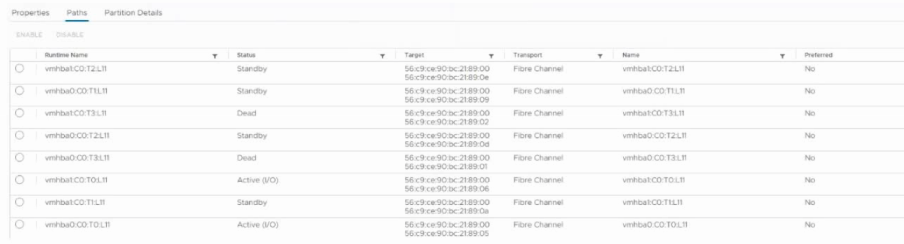
The above image represents an existing Alletra 6000 Peer Persistence configuration.
Which statement could be true in this scenario?
This topic and the two that follow it each carry 20%, making them the three pillars the exam stands on. Evaluating a proposed solution is the pre-sale and design skill: you are given a customer scenario with requirements, constraints, and sometimes an existing environment, and you must judge whether the proposed HPE solution meets them. The skill tested is critical assessment, not endorsement. A proposed solution may be undersized, over-engineered, or technically sound but mismatched to a stated business requirement,...
This topic and the two that follow it each carry 20%, making them the three pillars the exam stands on. Evaluating a proposed solution is the pre-sale and design skill: you are given a customer scenario with requirements, constraints, and sometimes an existing environment, and you must judge whether the proposed HPE solution meets them. The skill tested is critical assessment, not endorsement. A proposed solution may be undersized, over-engineered, or technically sound but mismatched to a stated business requirement, and the exam rewards identifying which.
How Evaluate proposed HPE storage solutions. is tested
At 20%, this topic generates more items than any other alongside performance tuning and troubleshooting. The items are typically multi-paragraph scenarios describing a customer's environment, growth projections, service-level requirements, and a proposed HPE solution. What they reward is the ability to identify the specific reason a proposal does or does not satisfy the stated constraints.
The most common trap is selecting an answer based on product familiarity rather than scenario fit. A well-known HPE platform is not the strongest choice if the scenario specifies a protocol it does not support or a capacity tier it cannot reach cost-effectively. Candidates also lose marks by overlooking a single constraint buried in the scenario text: one incompatible requirement is enough to disqualify an otherwise reasonable proposal. Read every constraint before evaluating any option. Items in this topic reward methodical elimination over pattern recognition, and the strongest response is the one that addresses the limiting factor in the scenario, not the most impressive-sounding architecture.
Timed practice under exam conditions matters most for scenario-heavy topics like this one. The ITExamsTopics practice test lets you work through full-length sessions so you build the pacing discipline that multi-paragraph evaluation items demand.
The question below gives you a proposed solution against a set of customer requirements and asks you to assess its suitability.
After the design and evaluation work of the previous topic, this one shifts to physical and logical implementation. At 10%, it is a mid-weight area, and its character is procedural: the exam is testing whether you know the correct sequence and conditions for standing up an HPE storage solution, not whether you can describe what one looks like. Sequence errors and prerequisite gaps are where candidates drop marks, so the detail that matters is the order of steps and what...
After the design and evaluation work of the previous topic, this one shifts to physical and logical implementation. At 10%, it is a mid-weight area, and its character is procedural: the exam is testing whether you know the correct sequence and conditions for standing up an HPE storage solution, not whether you can describe what one looks like. Sequence errors and prerequisite gaps are where candidates drop marks, so the detail that matters is the order of steps and what must be true before each one begins.
How Install the solution is tested
Items in this topic are procedural and often sequential. The exam rewards knowing which step must precede another and what conditions must be verified before installation progresses. Zoning, cabling, firmware compatibility, and initial configuration tasks all appear, and the items are designed to catch candidates who know the steps individually but apply them in the wrong order.
The primary trap is assuming that installation knowledge is purely hands-on and therefore hard to test in writing. The exam gets around this by describing a partially completed installation and asking what the integrator should do next, or by presenting an installation that has gone wrong and asking at which step the error was introduced. Items reward reading the described state carefully: what has already been done is as important as what remains. Candidates who skim the setup details and jump to the most familiar-sounding next step will frequently select a distractor that would be correct at a different point in the process.
If installation is a weak area for you, the most efficient check is to work through a targeted set of practice items rather than re-reading documentation. The ITExamsTopics practice test lets you focus on this topic alone and confirm your gaps before exam day.
The question below describes an installation in progress and asks you to determine the appropriate next action.
Performance tuning is where the exam gets genuinely difficult. Tied at 20% with evaluation and troubleshooting, this topic assumes the solution is already running and asks what you do when it is not running well enough. Multi-vendor complexity is explicit in the topic name, which means you cannot rely on HPE-only knowledge: the exam will place HPE storage in environments with third-party compute, networking, or hypervisors, and the optimisation decision must account for all of them. How Performance-tune and optimize...
Performance tuning is where the exam gets genuinely difficult. Tied at 20% with evaluation and troubleshooting, this topic assumes the solution is already running and asks what you do when it is not running well enough. Multi-vendor complexity is explicit in the topic name, which means you cannot rely on HPE-only knowledge: the exam will place HPE storage in environments with third-party compute, networking, or hypervisors, and the optimisation decision must account for all of them.
How Performance-tune and optimize an existing an HPE complex and/ or multi-vendor solutions is tested
At 20%, this topic generates a significant volume of items, and they are among the most technically demanding on the exam. A typical item describes a running environment with a stated performance symptom: latency spikes, throughput saturation, queue depth exhaustion, or cache hit-rate degradation. The item rewards identifying the correct tuning lever and knowing why the other options would not address the root cause.
The multi-vendor dimension is the sharpest trap. Candidates tend to focus on HPE-side tuning parameters and overlook the fact that the bottleneck in the scenario is on the host, the fabric, or the hypervisor layer. Items reward tracing the symptom to its source before selecting a remediation. A second common error is recommending a configuration change that would improve one metric while degrading another: for example, increasing queue depth to improve throughput at the cost of latency. The strongest responses in this topic account for the trade-off the scenario implies, not just the metric that is explicitly flagged as the problem.
Volume is the asset here: the more performance-tuning scenarios you work through before the exam, the faster you will recognise which layer a symptom points to. The ITExamsTopics practice test provides the breadth of scenarios needed to build that pattern recognition across HPE and mixed environments.
The question below describes a performance symptom in a running environment and asks you to select the appropriate tuning action.
Troubleshooting rounds out the trio of 20% topics. Where performance tuning deals with a system that works but underperforms, this topic deals with one that has partially or fully failed. The distinction matters because the diagnostic approach is different: a performance problem calls for measurement and adjustment, while a failure calls for isolation and recovery. The exam tests whether you can tell the two apart and apply the right methodology to each. How Troubleshoot relevant enterprise storage failures is tested...
Troubleshooting rounds out the trio of 20% topics. Where performance tuning deals with a system that works but underperforms, this topic deals with one that has partially or fully failed. The distinction matters because the diagnostic approach is different: a performance problem calls for measurement and adjustment, while a failure calls for isolation and recovery. The exam tests whether you can tell the two apart and apply the right methodology to each.
How Troubleshoot relevant enterprise storage failures is tested
Items here present failure scenarios with symptoms, log excerpts described in plain language, or a sequence of events leading to an outage. What they reward is systematic fault isolation: ruling out layers of the stack methodically rather than jumping to the most dramatic-sounding cause. Candidates who treat troubleshooting items as pattern-matching exercises, selecting the answer that matches a familiar failure mode, will be caught by scenarios where the obvious cause has already been ruled out within the item's setup text.
Data path failures, controller faults, fabric connectivity losses, and host-side errors all appear. The trap is that several of these can produce identical surface symptoms, and the item's setup will contain the detail that distinguishes them. Missing that detail is the most common source of lost marks. Items also reward knowing the recovery sequence after a failure is identified: isolating the fault, containing the impact, and restoring service in the right order. Skipping straight to restoration without isolation is a distractor pattern this topic uses repeatedly.
Troubleshooting items are the hardest to prepare for by reading alone because the skill is diagnostic, not declarative. Working through the ITExamsTopics practice test exposes you to the range of failure scenarios the exam uses, so you arrive knowing what systematic elimination looks like under time pressure.
The question below places you at the start of a storage failure and asks you to identify the appropriate diagnostic step.
Configuration is the final topic and, at 7%, the lightest by weight. Do not treat it as trivial: the multi-vendor angle means configuration items can draw on knowledge from every earlier topic. The difference between this topic and installation is that you are working with a system that is already in place, adjusting settings, integrating additional components, or extending an existing environment rather than standing one up from scratch. How Configure complex and/or multi-vendor HPE storage solutions. is tested At...
Configuration is the final topic and, at 7%, the lightest by weight. Do not treat it as trivial: the multi-vendor angle means configuration items can draw on knowledge from every earlier topic. The difference between this topic and installation is that you are working with a system that is already in place, adjusting settings, integrating additional components, or extending an existing environment rather than standing one up from scratch.
How Configure complex and/or multi-vendor HPE storage solutions. is tested
At 7%, this topic contributes a small number of items, but they tend to be technically specific. Items describe an existing environment and a configuration goal: adding a new host, changing a replication policy, integrating a third-party component, or adjusting access controls across a mixed fabric. What they reward is knowing the right parameter, the right scope, and the right sequence for the described change.
The multi-vendor framing is the primary source of difficulty. Configuration choices that are correct in a pure HPE environment may need adjustment when a third-party array, hypervisor, or switch is in the picture. Candidates lose marks by applying HPE-specific defaults to a scenario where the non-HPE component has a different expectation. A second trap is scope: a configuration change applied at the wrong level (volume versus host versus fabric) will be technically plausible but functionally wrong for the described goal. Items reward reading the described environment completely before selecting any configuration action.
The free demo on the ITExamsTopics practice test covers a sample of items across all seven topics, including configuration. Try it before purchasing to confirm the item style matches what you are preparing for.
The question below describes an existing multi-vendor environment and asks you to select the configuration action that meets the stated goal.
Ready to Start Practicing?
Access all questions and start your exam preparation journey
Upgrade to Full HPE7-J02 Exam Questions 🚀


