
Integrated Physical Sciences (C165, C908) Exam Topics and Questions
These WGU Integrated Physical Sciences (C165, C908) exam topics are organized according to official exam domains to help candidates quickly verify coverage and focus on assessment rather than theory. Each domain is paired with topic-wise Integrated Physical Sciences (C165, C908) sample questions that reflect how objectives are tested in the actual exam. This structure enables efficient review, targeted self-assessment, and rapid identification of weak areas when preparing for the WGU Integrated Physical Sciences certification exam.
Let's Practice Free WGU Integrated Physical Sciences (C165, C908) Questions Aligned with Official Exam Topics
Science is a method before it is a body of facts, and this topic tests whether you understand that method well enough to evaluate it. Expect questions that put you inside a research scenario and ask you to judge whether a procedure is sound, whether a conclusion is warranted, or whether a result is reliable. The traps are subtle: a study can be well-designed and still produce a tentative conclusion, and a hypothesis can be falsifiable without yet being tested....
Science is a method before it is a body of facts, and this topic tests whether you understand that method well enough to evaluate it. Expect questions that put you inside a research scenario and ask you to judge whether a procedure is sound, whether a conclusion is warranted, or whether a result is reliable. The traps are subtle: a study can be well-designed and still produce a tentative conclusion, and a hypothesis can be falsifiable without yet being tested.
How Nature and Process of Science is tested
Items in this area rarely ask you to recall a definition. Instead, they present a scenario, a brief description of an experiment or an observation, and ask you to identify what step comes next, what the data actually support, or what flaw undermines the conclusion. The distinction between a hypothesis and a theory is examinable, but the trap is assuming a theory is weaker than a hypothesis: items reward recognising that a scientific theory is a well-supported explanatory framework, not a guess. Similarly, items on experimental design reward identifying control variables and recognising when a sample is too narrow to generalise from. Candidates lose marks by defaulting to everyday language meanings rather than the precise scientific ones. Pay close attention to what the data in a scenario actually say versus what a researcher claims they say: the gap between those two things is where most marks in this topic are decided.
The ITExamsTopics practice test lets you filter by topic, so you can spend a focused session on science process items before moving to the content-heavy topics. Seeing how these scenario-based items are framed before the real exam removes a layer of surprise on test day.
The question below puts you inside a research scenario typical of this topic. Work through it before reading on.
Consider the location of nitrogen (N) on the periodic table
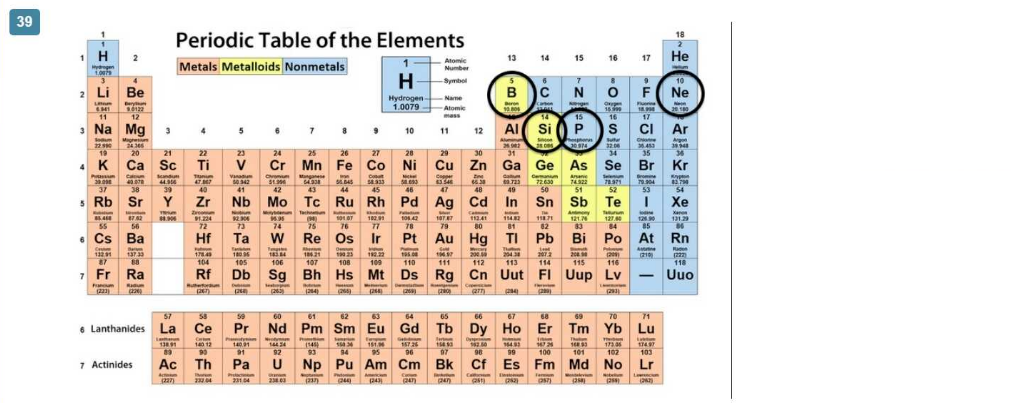
Which element has chemical properties that are similar to nitrogen's7
Where the previous topic tested how science works, this one tests the physical laws that govern the world. Physics items on this exam tend to be applied rather than purely mathematical: you are more likely to be asked why a moving object behaves a certain way than to solve a multi-step equation. That said, proportional reasoning matters. If you are shaky on the relationships between force, mass, acceleration, energy, and wave behaviour, this topic will cost you time and marks....
Where the previous topic tested how science works, this one tests the physical laws that govern the world. Physics items on this exam tend to be applied rather than purely mathematical: you are more likely to be asked why a moving object behaves a certain way than to solve a multi-step equation. That said, proportional reasoning matters. If you are shaky on the relationships between force, mass, acceleration, energy, and wave behaviour, this topic will cost you time and marks.
How Physics Applications and Fundamental Concepts is tested
Items here reward candidates who can translate a physical situation into the correct underlying principle and then reason from it. A question might describe a collision, a circuit, or a wave and ask what happens next or what quantity changes. The demand is conceptual application, not formula recall alone. Candidates lose marks most often in two places: confusing the direction of energy transfer with the direction of force, and misapplying Newton's laws to situations involving multiple interacting objects. Thermodynamics items are a consistent weak spot because candidates conflate heat and temperature, or misread which direction energy flows between objects at different temperatures. Items on waves and light reward knowing the relationship between frequency, wavelength, and speed, and knowing what changes and what stays constant when a wave moves between media. Work through enough varied scenarios that the underlying principle becomes the first thing you see, rather than the numbers.
A large bank of varied physics items lets you spot which concept keeps tripping you up, whether that is energy transfer, wave behaviour, or forces, so you can target that gap rather than re-reading a chapter that is mostly already solid.
Test your grasp of a core physics principle with the item below before continuing to the chemistry topic.
Two identical cars travel one behind the other The rear car is traveling faster and stakes the front car in a rear end collision as shown in the figure below
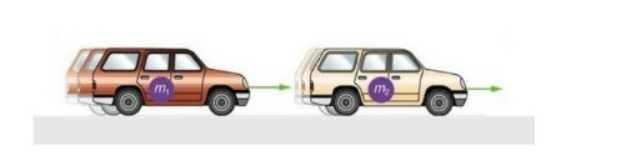
What happens to the velocities of the two cars, assuming that the collision is completely elastic?
Chemistry shares the applied emphasis of the physics topic but shifts the frame to matter, its structure, and how it transforms. The questions are less about memorising the periodic table and more about reasoning from atomic and molecular behaviour to observable outcomes. Bonding, reactions, and the properties that follow from them are all fair game. Where this topic tends to catch candidates out is in the connection between microscopic structure and macroscopic properties: you need to move fluently between those...
Chemistry shares the applied emphasis of the physics topic but shifts the frame to matter, its structure, and how it transforms. The questions are less about memorising the periodic table and more about reasoning from atomic and molecular behaviour to observable outcomes. Bonding, reactions, and the properties that follow from them are all fair game. Where this topic tends to catch candidates out is in the connection between microscopic structure and macroscopic properties: you need to move fluently between those two levels.
How Chemistry Concepts and Applications is tested
Items reward candidates who can connect a change at the atomic or molecular level to something measurable in the real world. A scenario might describe a substance's behaviour and ask which structural feature explains it, or describe a reaction and ask what type it represents and what drives it. The law of conservation of mass is frequently tested through reaction scenarios rather than direct recall, and candidates who try to balance equations in their heads under time pressure often make avoidable errors. Acid-base chemistry items reward understanding pH as a logarithmic scale and knowing what happens to ion concentrations as you move across it. The biggest source of lost marks is treating chemistry as a set of isolated facts rather than a connected set of cause-and-effect relationships. If you can articulate why a substance behaves the way it does, rather than just what it does, you are answering at the level these items require.
Working through the ITExamsTopics practice test under timed conditions is particularly valuable here: chemistry items often involve multi-step reasoning, and pacing yourself across a full set of questions is a skill worth building before the real exam.
The chemistry item below is representative of the applied reasoning this topic demands. Attempt it before moving on.
The final topic shifts scale dramatically: from atoms and forces to the planet as a whole. Earth science on this exam is about systems and cycles, the way energy, water, rock, and atmosphere interact and change over time. The integrative nature of the topic is also its main difficulty. You will be asked to reason across subsystems rather than within a single one, and the items that link, say, plate tectonics to atmospheric composition or ocean circulation to climate are...
The final topic shifts scale dramatically: from atoms and forces to the planet as a whole. Earth science on this exam is about systems and cycles, the way energy, water, rock, and atmosphere interact and change over time. The integrative nature of the topic is also its main difficulty. You will be asked to reason across subsystems rather than within a single one, and the items that link, say, plate tectonics to atmospheric composition or ocean circulation to climate are the ones that separate prepared candidates from those who studied each cycle in isolation.
How Earth System and Processes is tested
Items in this topic reward systems thinking: the ability to trace a change through one part of the Earth system and predict its effect on another. A scenario might describe a volcanic event and ask about its downstream effect on climate or ocean chemistry. Candidates who studied each Earth system cycle as a standalone topic struggle here because the items are deliberately cross-cutting. The rock cycle, water cycle, carbon cycle, and plate tectonic processes are all tested, but rarely in isolation. Geologic time is another area where candidates lose marks: the relative ordering of events and the principles used to establish that ordering matter more than memorising specific dates. Items on weather and climate reward distinguishing between the two and understanding what drives large-scale atmospheric circulation. The most reliable preparation strategy is to practise tracing cause-and-effect chains across at least two Earth subsystems at once, because that is the cognitive move these items are built around.
The ITExamsTopics PDF and practice test together give you coverage across all four topics in one purchase. For this final topic especially, reviewing the full range of item types in the bank confirms whether your systems-level reasoning holds up across every scenario type, not just the familiar ones.
The question below asks you to reason across Earth subsystems in exactly the way this topic demands. Work through it now.
Ready to Start Practicing?
Access all questions and start your exam preparation journey
Upgrade to Full Integrated Physical Sciences (C165, C908) Exam Questions 🚀


